
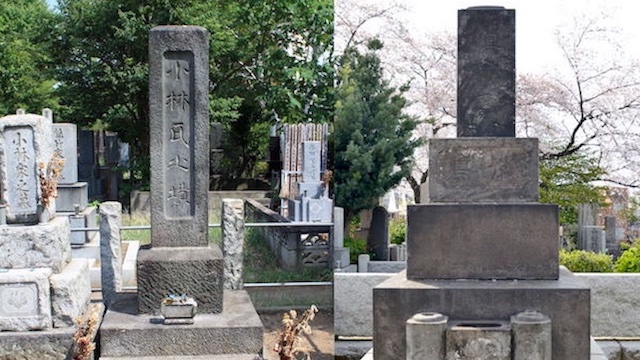
伊藤家の墓は、東京のホテル・オ-クラとアメリカ大使館の後ろにある小さい寺「林誓寺」である。
豪商として有名だった伊藤八兵衛の墓は、幕府に特別に許されていたという特別な傘のある墓であった。
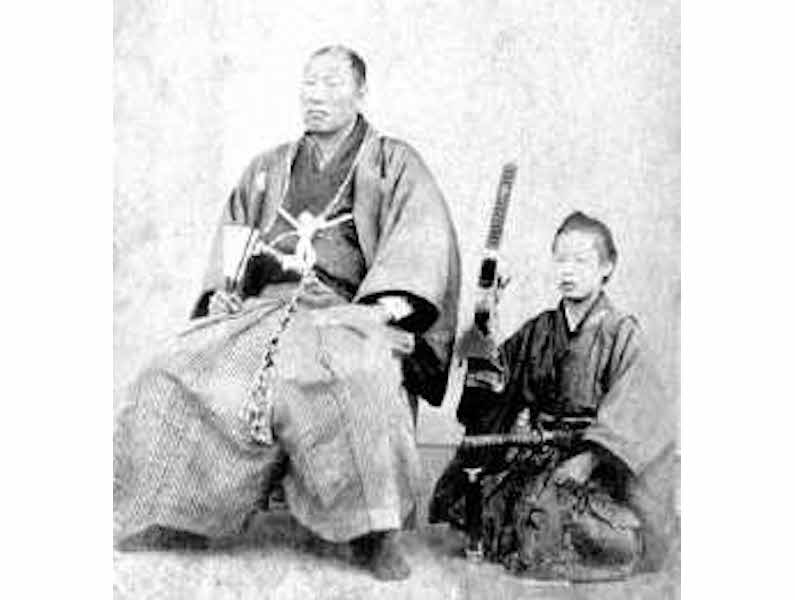
He was born as the first son of a wealthy farmer, Zenzo Uchida in Ogaya village at Kawagoe in Musashi Province (Present Ogaya in Kawagoe city of Saitama prefecture).
At the time of the Meiji Restoration he donated to the government the amount of money of 50 thousand ryo (said to be about several hundred million yen) while the Mitsui did 30 thousand ryo. It is also said that he buried a stone jar containing 700 thousand ryo of old gold and silver coins.
Yuki, his eldest daughter, was the wife of Count Takanashi.
Kaneko, his second daughter, was the wife of Eiichi Shibusawa, a Minister of Foreign Affairs.
Kiyoko, his third daughter, was the wife of Kazusuke Sasaki, a trading merchant.
Nobuko, his fourth daughter, was the wife of Count Minagawa.
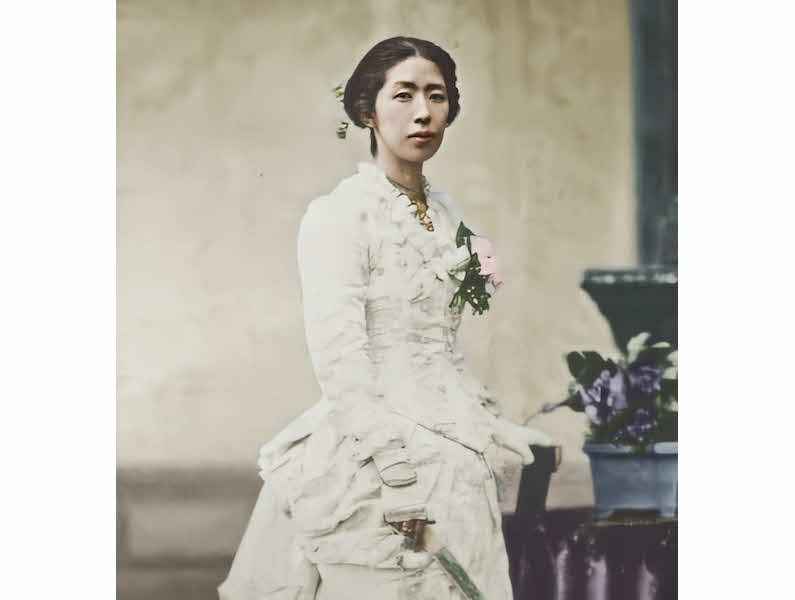
Kanako Shibusawa, the beautiful wife of **Eiichi Shibusawa**, who has recently gained attention as the portrait on Japan’s new 10,000-yen banknote, is introduced here.
She was the second daughter of the wealthy merchant **Hachibei Ito**. After the death of Shibusawa’s first wife, Chiyo, Kanako married Eiichi in 1883 (Meiji 16) as his second wife.
Eiichi Shibusawa was influenced by the ideology of **sonnō jōi** (“Revere the Emperor, Expel the Barbarians”). He first served **Yoshinobu Tokugawa** of the Hitotsubashi branch and later accompanied **Akitake Tokugawa**, Yoshinobu’s younger brother and the lord of the Mito domain, to the **Paris World Exposition**, where he directly learned from the advanced knowledge and systems of Western countries.
After returning to Japan, he worked at the Ministry of Finance and later became the president of the **First National Bank**. While serving in this role, he devoted himself to founding and nurturing many private companies and institutions.
Kanako actively supported her husband’s work. She traveled with him to the United States and met with **President Theodore Roosevelt**, and she also accompanied the **Japanese Businessmen’s Mission to America**, led by Eiichi Shibusawa, which consisted of 50 representatives from chambers of commerce in six major Japanese cities.
In addition, she participated in charitable activities such as bazaars held at the **Rokumeikan**.
Eiichi Shibusawa is known as a key figure who laid the foundation for Japan’s modern economic development. Behind his achievements and the introduction of new values that transformed Japanese society, the support of his wife Kanako—who worked alongside him—must have played a significant role.
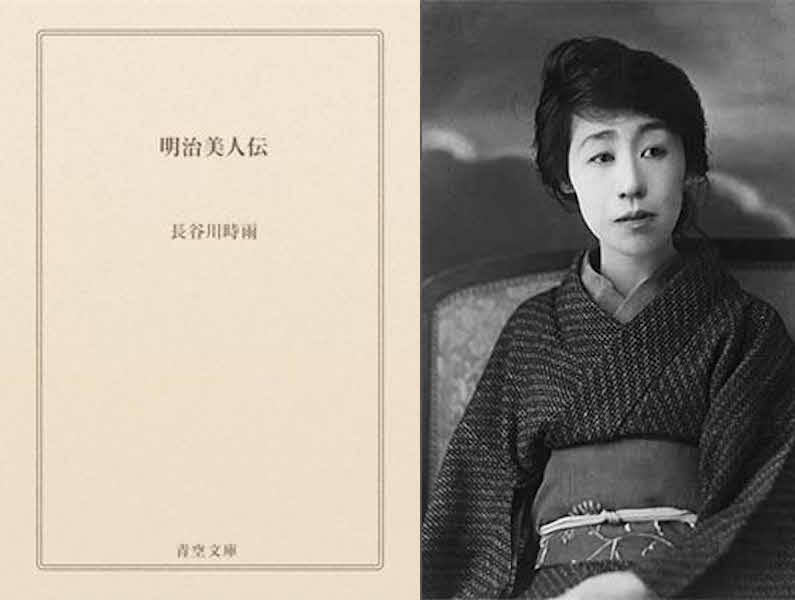
What is meant by a “great wealthy person”? It is not simply someone who possesses wealth.
Baron Shibusawa was a man who fully embodied both the dignity and character of such a person,
and in her younger days his wife, Kanako, was also widely known for her beauty.
There is a touching story about the time she entered the Shibusawa household.
It was not because of difficulties with children from a previous marriage.
Rather, it was the story of the rise and fall in the life of Kanako, who was born
the daughter of a wealthy merchant family known as Iseya Hachi in Aburabori, Fukagawa.
Aburabori was a district of wholesale merchants, and Iseya Hachi—whose real name was Ito Hachibei—
served as a financial agent for the Lord of the Mito domain.
The name Iseya Hachibei was famous in Yokohama and was often compared with the renowned merchant Itohei.
He wielded great influence not only in the rice market but also in the foreign silver (dollar) market.
Kanako was one of twelve children. At the age of eighteen, a husband was invited from
Goshu (Omi Province) to marry into the family. For ten years afterward, as the daughter
of the household, she lived freely and comfortably, spending her days sightseeing and
enjoying life much as she had in her youth. However, when fortune turns, even a great
household can collapse quickly, and due to a small financial miscalculation the family
fell into ruin.
Her husband, though they had children together, was sent back to his home province of Omi
(around 1880, perhaps Meiji 13). At that time a severe cholera epidemic was spreading
through the city, which only deepened the anxiety of those who had fallen into poverty.
She went from person to person asking to become a geisha, saying, “I want to become a geisha—
it is something I have always loved.” Yet behind those words, how many tears must have been hidden.
She wished to ease the burden on her family even a little, and while concealing the sorrow
of sacrificing herself, she said she wanted it because she “liked it,” so that those who heard
her would not feel pain. In this way, she tried to exchange her own body for money.
There was an employment broker called Sushi-ya in Ryogoku that helped arrange such matters,
and someone introduced her there. However, the broker suggested that she could instead become
a mistress (concubine).
She firmly refused, saying that she would never accept such a position, and she caused
the broker considerable trouble with her persistence. Even though she had fallen into poverty,
she never abandoned her dignity. At that time, the Shibusawa household had lost its mistress
to cholera and was in difficulty, so she was asked to take on the role and was brought there.
The house she entered—she realized in a dizzying moment as she stepped over the kitchen
threshold—was in fact the very same house that had once been her own home, the residence
of Iseya Hachi in Aburabori before the family's bankruptcy.
Today she is the wife of the distinguished baron who has become an indispensable figure
in the financial world. She now spends her days at the Shibusawa villa in Asukayama,
yet the main house in Fukagawa remains filled with memories—the place where the story
of her life first began.
“Baron Shibusawa” — His official court rank and honors were Senior Second Rank, First Order of Merit, Viscount.
“Fukagawa Aburabori” — Present-day Saga 2-chome, Fukuzumi 2-chome, and Fukagawa 1–2-chome in Koto Ward, Tokyo.
“Financial agent for the Lord of Mito” — Ito Hachibei’s younger brother, Awashima Chingaku, served the Mito domain as a retainer under the name Kobayashi Jozo.
“One of twelve children” — Kanako was the second daughter.
“Goshu” — Another name for Omi Province, present-day Shiga Prefecture.